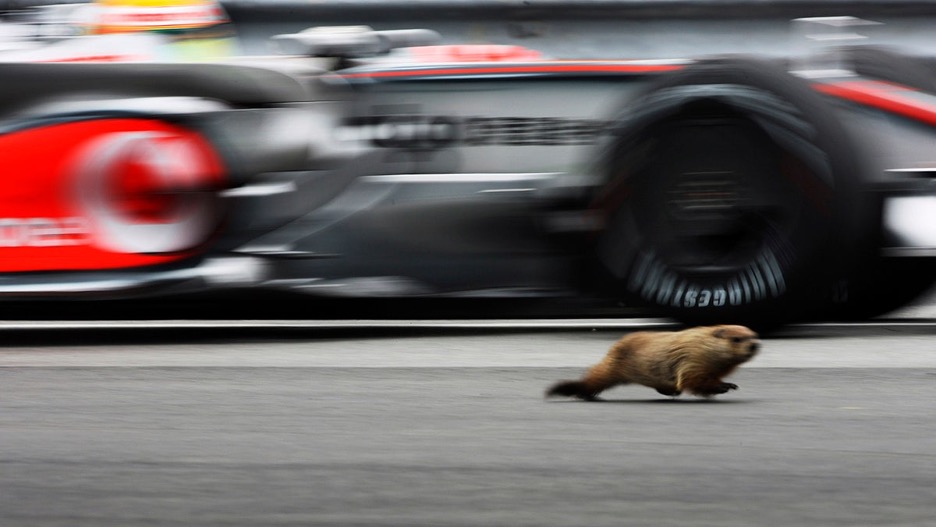
With Round 5 in Canada now complete, the 2026 Formula One season has already produced one dominant talking point: the sport’s controversial new power unit regulations. There will be no new regulations about groundhogs, LOL.
The latest engine formula was designed to create a near 50-50 split between internal combustion power and electric energy. On paper, the concept aligned perfectly with Formula One’s long-standing commitment to innovation and sustainability. In practice, however, the rollout has been far from smooth.
The problems became obvious during the opening Grand Prix in Melbourne. Cars were visibly running out of power at several points around the circuit, forcing drivers into aggressive energy-saving modes rather than flat-out racing. Fans quickly noticed that races were beginning to feel manufactured, with competitors managing batteries and lift-and-coast strategies instead of attacking wheel-to-wheel.
Driver frustration soon followed. Several drivers publicly questioned the effectiveness of the new power unit package, particularly after the Oliver Bearman–Franco Colapinto incident in Japan, where concerns were raised about reduced power delivery and unpredictable pace differentials.
Fun Fact: At the 2026 Japanese GP, Oliver Bearman crashed heavily after rapidly closing on Franco Colapinto due to a huge speed difference caused by the new 2026 hybrid energy deployment rules. Bearman moved onto the grass to avoid contact, lost control at over 300km/h and hit the barriers hard. The crash registered around 50G. A 50G impactmeans Bearman’s body experienced deceleration forces about 50 times gravity for a split second - an extremely violent crash by F1 standards. Anything above~30G is considered very severe. The incident became a major talking point because drivers had already warned the 2026 cars could create dangerous closing speeds when one car has full battery deployment and another is harvesting energy. The crash reinforced fears that the new rules may need changes.
In response, the FIA introduced a revised power unit package at Miami. While the changes did not completely solve their issue, they improved drivability, enhanced safety and reduced some of the artificial feel that had begun to overshadow the racing.
Does Formula One Really Need These Engines?
The debate now goes far beyond lap times.
Is Formula One pursuing these power units purely in the name of sustainability? Or has the sport drifted too far from what made it compelling in the first place?
The FIA has long promoted broader social initiatives including road safety, gender equality, inclusion and environmental responsibility. Yet Formula One also has to remain entertaining for fans, commercially viable for teams and technologically relevant for manufacturers.
That balancing act appears to be shifting once again.
At the Miami Grand Prix, FIA PresidentMohammed Ben Sulayem announced that naturally aspirated V8 engines are expected to return in 2031, albeit with a smaller hybrid component attached. The decision reflects a dramatic change in the global automotive industry.
A decade ago, manufacturers were racing toward fully electric futures. Today, many major automotive brands are pivoting toward hybrid technology instead, acknowledging that full electrification may not be the universal solution once predicted.
Formula One, as it often does, is adapting.
Can Formula One Still Reach Net Zero by 2030?
For many fans, Formula One’s environmental strategy begins and ends with the cars themselves. In reality, the sport’s carbon footprint extends far beyond the power unit.
F1 is a massive global operation involving freight fleets, aviation logistics, hospitality infrastructure and the transportation of thousands of personnel across multiple continents.
Ironically, some of the sport’s biggest sustainability gains are happening away from the racetrack.
Today’s Formula One cars already run on advanced sustainable fuels, while F1’s European freight fleet increasingly uses low-carbon fuel alternatives as part of the sport’s broader Net Zero 2030 strategy.
Sustainable aviation fuel is also being introduced to reduce emissions associated with transporting the championship around the globe.
Tire supplier Pirelli has likewise embraced sustainability initiatives by incorporating renewable and recycled materials into its race tires. Used tires are collected and recycled through specialized recovery programs designed to minimize landfill impact.
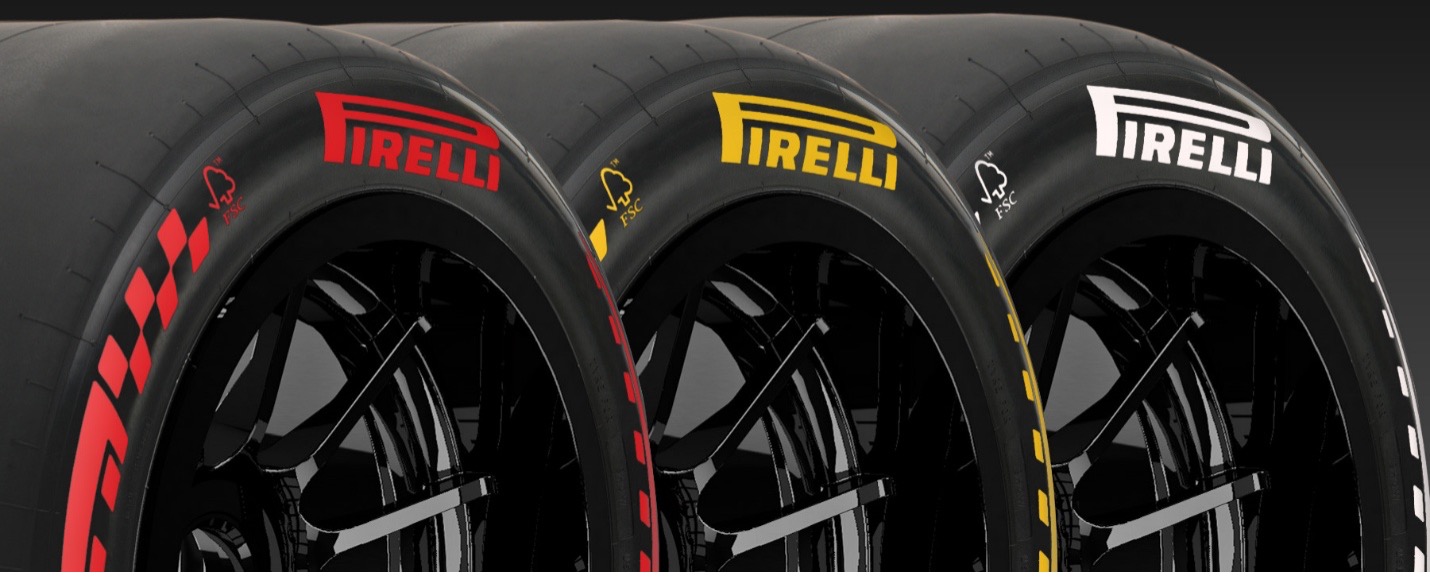
FunFacts: During the 2025 Formula One season, Pirelli transported and managed nearly 32,000 individual tires across the global calendar. Teams covered an incredible 341,000 kilometres on those tires - enough distance to circle the Earth more than eight times. Yet despite the enormous demand, more than 2,700 tire sets were never used at all, highlighting the massive logistical scale and built-in redundancy of modern F1.
What More Could Be Done?
If Formula One is serious about reducing emissions, the calendar itself may offer the biggest opportunity.
The current schedule often requires teams to crisscross the globe in inefficient patterns. A more regionally organized calendar - including dedicated North American, Asian and Middle Eastern swings - could significantly reduce freight-related emissions.
Fun Fact: During the 2025 Formula One season, teams travelled roughly 75,000 miles globally - equivalent to driving from New York to Los Angeles approximately 27 times while transporting the sport’s enormous mobile infrastructure.

Urban races may also play a role. Events held in major cities typically allow fans to rely on public transportation rather than personal vehicles, reducing the environmental impact associated with large-scale sporting events.
Ultimately, Formula One faces a challenge that Quizefy enthusiasts and longtime F1 fans alike can appreciate: how do you preserve the essence of a sport built on speed, noise and engineering spectacle while adapting to a rapidly changing world?
The answer may not lie in abandoning sustainability, but in finding a version of it that still allows Formula One to feel unmistakably like Formula One.