


Do you know what a chokepoint is?
Every day, tens of millions of barrels of oil move through a handful of narrow maritime passages known as chokepoints. These routes, such as the Strait of Hormuz and the Suez Canal, are essential to global energy flows, but they also represent critical vulnerabilities in the world economy.
The most important is the Strait of Hormuz, where, in normal times, roughly 20 million barrels per day pass through a channel only 33 km wide.
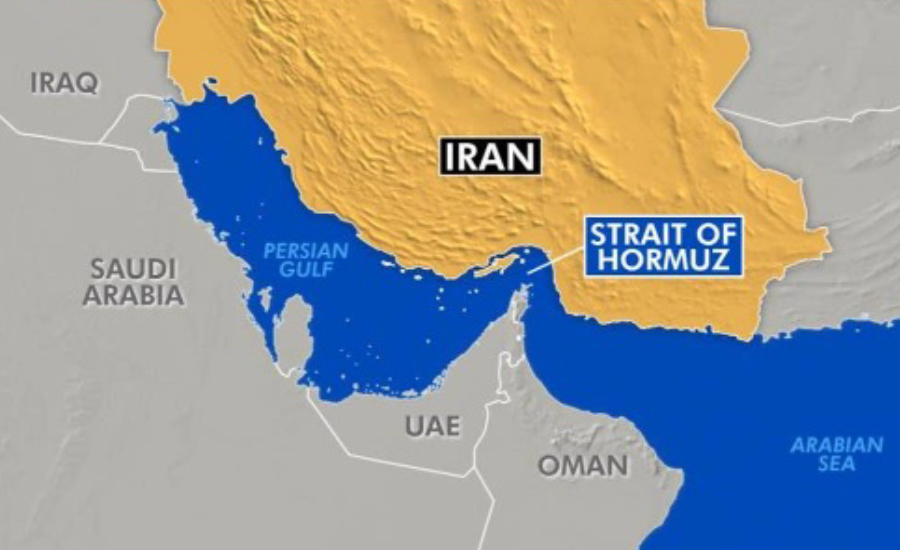
Though actual shipping lanes are about 3 km wide per direction. tankers must follow strict Traffic Separation Schemes, maintaining distances of 1–2 nautical miles (2–4 km) due to their long stopping distances, making navigation in confined waters highly sensitive.
Large oil tankers (VLCCs – Very Large Crude Carriers) can carry up to 2 million barrels of oil, worth $150–200 million per voyage, yet typically operate with just 20–30 crew members. Despite the massive value of cargo, crews are small and highly trained, reflecting the highly automated and standardized nature of modern shipping.
Human roles at sea: tankers vs cruise ships
A tanker captain typically earns around $10,000–13,000 per month, while cruise ship captains working for major operators like Royal Caribbean or Carnival Corporation may earn $8,000–20,000+ per month, with top salaries exceeding tanker levels.
This difference exists even though tankers carry far higher-value cargo and pose major environmental risks. Cruise ship captains manage thousands of passengers, complex hotel operations and constant port maneuvering, while tanker operations are more standardized, heavily regulated and often conducted in open ocean transit. Maritime pay is driven less by catastrophic risk and more by operational complexity, liability structure and industry profitability.
Why the United States still cares about Hormuz
Even though the United States imports less oil from the Middle East than in past decades, the importance of the Strait of Hormuz remains global.
Oil is priced on a global market, meaning that when supply through Hormuz is threatened, prices rise worldwide. Because roughly 20% of global oil supply flows through this narrow strait, even the risk of disruption can trigger immediate increases in global oil benchmarks, which then raise U.S. gasoline, diesel, aviation fuel and transportation costs.

This makes Hormuz a direct driver of U.S. inflation pressure, even without heavy physical reliance on its crude oil. Higher energy prices also affect food distribution, manufacturing costs and consumer spending, meaning a chokepoint thousands of miles away can influence everyday prices in the United States.
The U.S. also has strong strategic interests in maintaining open sea lanes for allies. Countries such as Japan, South Korea, India and many European economies depend heavily on Gulf oil and liquefied natural gas. Any disruption in Hormuz would, therefore, strain allied economies, disrupt global supply chains and create broader financial instability.
Finally, the Strait is central to long-standing geopolitical and naval strategy. The U.S. maintains a naval presence in the region to deter blockages, ensure freedom of navigation and reduce the risk of escalation involving regional powers. Because oil, shipping and security are deeply interconnected, instability in Hormuz has immediate global consequences. “We don’t need them” does not apply.
The Strait of Malacca is another critical chokepoint, handling over 23 million barrels per day, with some sections as narrow as 2.8 km, making it one of the most congested shipping lanes on Earth.
The Suez Canal, opened in 1869, carries around 12% of global trade and was thrust into global attention during the 2021 Suez Canal blockage, when a single grounded ship halted global trade for nearly a week.
At the southern gateway to the Red Sea lies the Bab el-Mandeb, which carries over 4 million barrels of oil per day and sits near active conflict zones, making it one of the most geopolitically sensitive maritime routes.
Other key passages include the Turkish Straits and the Panama Canal, opened in 1914 and transferred to Panama in 1999, both essential to regional and global trade flows.
Insurance, risk and oil prices
A crucial hidden layer in global shipping is marine insurance, offered by companies such as Lloyd’s of London. In high-risk chokepoints like Hormuz or Bab el-Mandeb, war risk premiums can rise from fractions of a percent to over 1% of a vessel’s value per voyage, sometimes adding over $1 million per supertanker trip. In extreme cases, insurers may withdraw coverage entirely, effectively stopping traffic without a physical blockade.
These costs directly influence oil markets. Even the threat of disruption can cause price spikes of 10–30% or more, as traders react to potential delays, rerouting, and rising freight costs rather than actual shortages.
Globally, about three-quarters of traded oil moves by sea, making these chokepoints not just regional hazards but global pressure points. Their disruption drives up fuel prices, increases shipping costs and fuels inflation worldwide. Are you feeling the pinch?
Daniel Yergin's words resonate more than ever - have you come to terms with this new reality?
“We are living in a new age of energy supply anxiety.” (Daniel Yurgin, American author, Pulitzer Prize winner and energy expert)