


When Andrea “Kimi” Antonelli took victory in the 2026 Chinese Grand Prix on Sunday, it was more than a milestone - it was a moment that confirmed motorsport’s next generational star had truly arrived. At just 19 years, 6 months and 17 days old, the Italian Mercedes driver became the second youngest race winner in Formula One history, behind only Max Verstappen, who first won a Grand Prix as an 18 year old in 2016.
"To be young is to see impossibility as pure invitation." (Anonymous)
For those who have followed Antonelli’s career closely, the victory was less a surprise than the logical continuation of a path mapped out since childhood.
Born on 25 August 2006 in Bologna, Italy - in the heart of the Country’s famed “Motor Valley” (la Terra dei Motori) - Kimi was immersed in motorsport from day one.
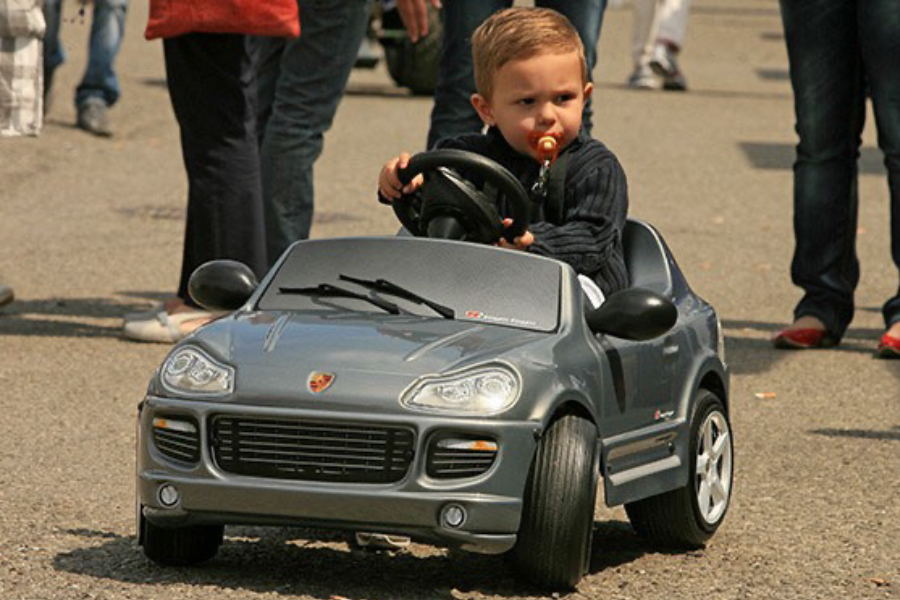
His father, Marco Antonelli, is a former touring car racer. Growing up around professional racing gave Kimi access to engineering insights, data analysis and real competition at a very early age.
Antonelli began karting seriously at 7 years old and dominated youth karting in Europe.
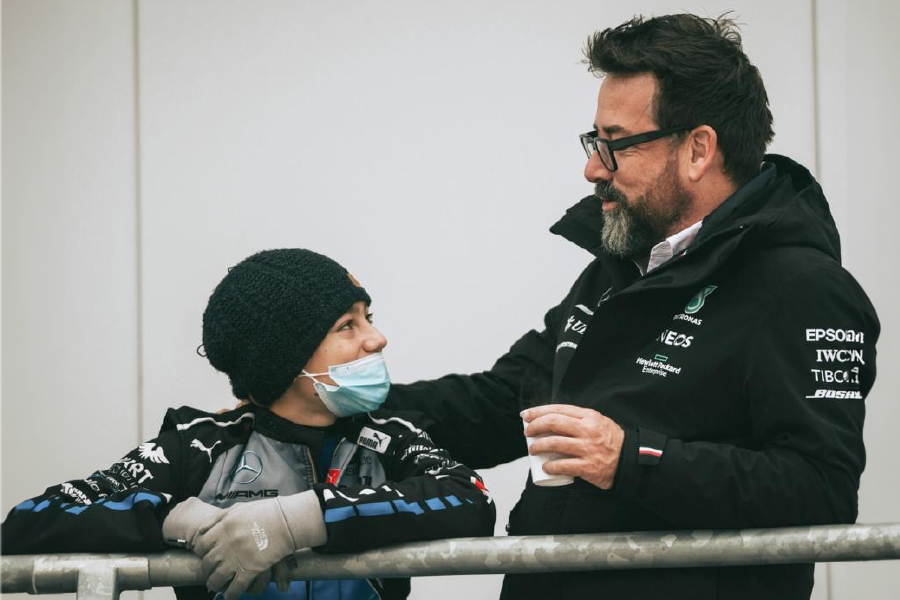
As soon as his age permitted, he transitioned to car racing at age 15, competing in F4, where he demonstrated his talent across different circuits and competition levels. From there he moved up to Formula Regional both in the Middle East and Europe. He skipped the traditional F3 next step and competed in Formula 2 in 2024, followed by his first F1 start in Australia in 2025.
Listen to this podcast about Gwen Lagrue, Mercedes’ talent scout.

Antonelli’s trajectory also reflects a broader trend in modern motorsport: drivers are identified, trained and groomed from an extremely young age, often starting in structured programs around 10 or 11. By the time they reach Formula One, they may already have a decade of competitive racing experience. Antonelli embodies this modern pathway in motorsports and many other sports.
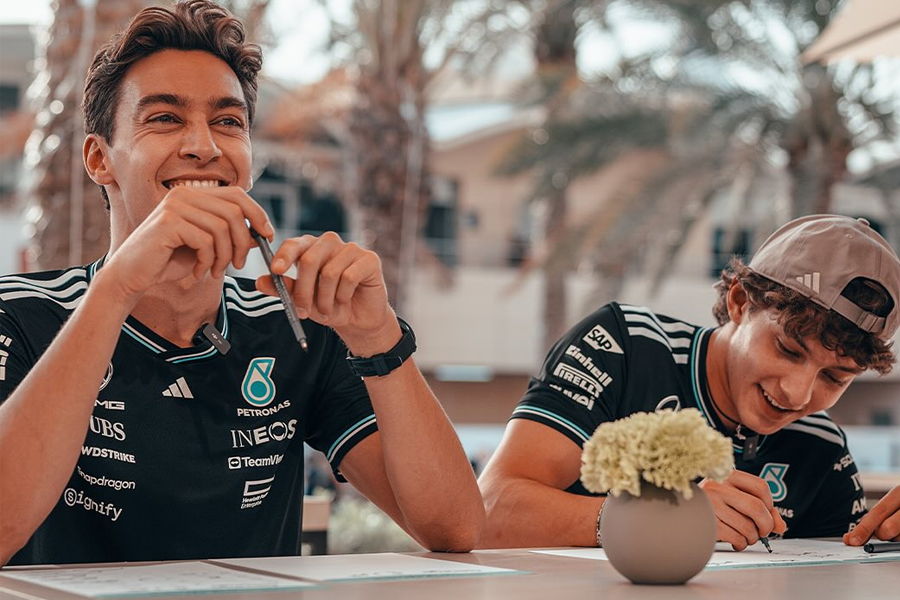
Despite racing at the highest levels, he has maintained a surprisingly normal teenage life. Until very recently, he was finishing high school, completing homework and exams while traveling between race weekends and simulator sessions in Brackley. He continues living with his family in Italy, commuting for testing rather than immediately relocating and friends note that away from the track he still behaves like a typical teenager.
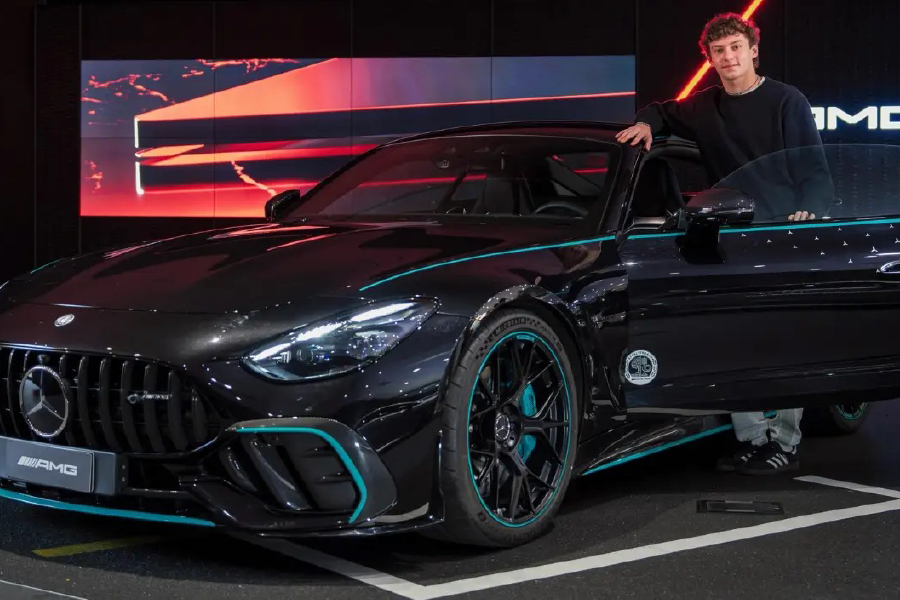
That youthful reality was highlighted earlier this year when Antonelli was involved in a minor single-vehicle car accident in Italy. No one was hurt, but it was a reminder that even a driver piloting a 1,000-horsepower F1 car at 300 km/h is still learning everyday life behind the wheel.
His race number, 12, is a tribute to Ayrton Senna, whose races he watched obsessively as a child.
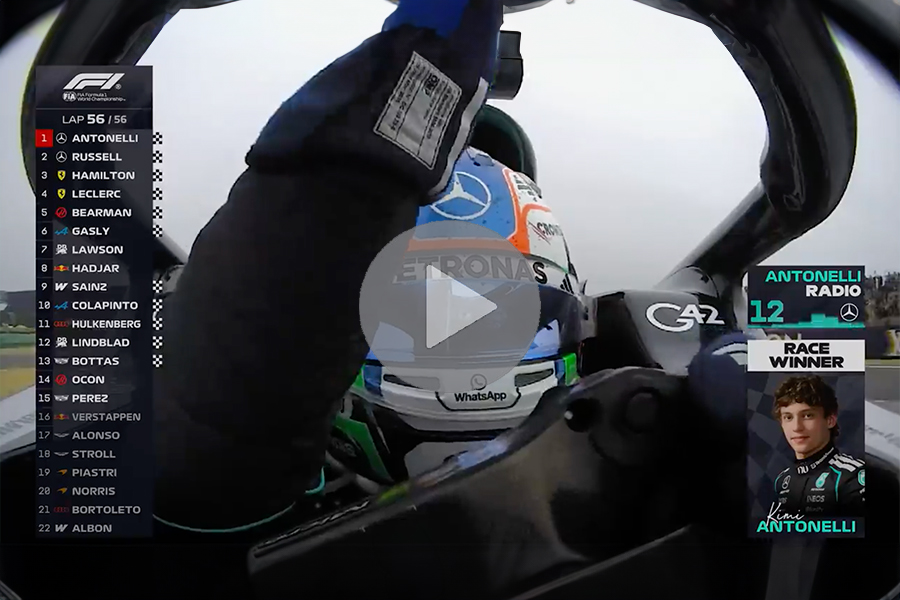
After climbing from the cockpit, he summed it up simply:
“It’s an incredible feeling. But this is just the beginning.” (Kimi Antonelli at the Chinese GP)
Mercedes team principal Toto Wolff added:
“Many people said the kid was too young … but the kid did good.” (Toto Wolff, Kimi’s boss and Mercedes F1 Team Principal)
And that is perhaps the most remarkable part of Antonelli’s story so far. At an age when most teenagers are still figuring out their future, he is already winning Formula One races. He is studying telemetry instead of textbooks, managing global media attention instead of university applications and racing at speeds that leave almost no room for error.
Yet behind the statistics and trophies remains a 19-year-old who still lives at home, only recently finished school, and - despite the pressure of one of the most demanding sports in the world - still approaches racing with the enthusiasm of someone who grew up watching it from the pit wall of his father’s team. Formula One has likely found its next superstar. The hope now is that, somewhere between simulator sessions, race weekends and championship battles, Kimi Antonelli still finds time to enjoy his youth.
"Life moves pretty fast. If you don't stop and look around once in a while, you could miss it." (Ferris Bueller)